
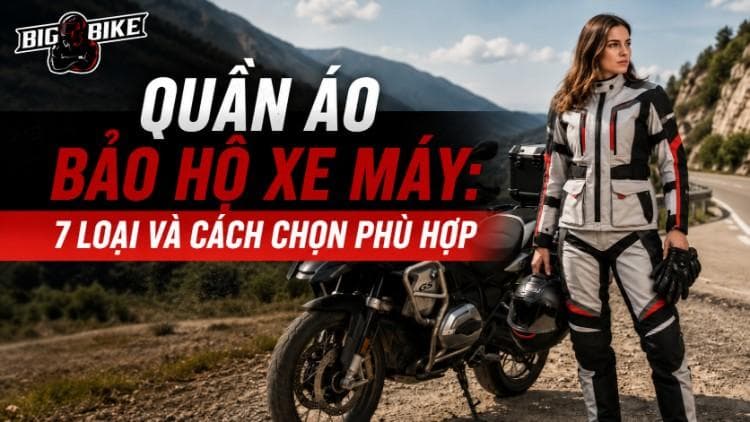
Motorcycle protective clothing is increasingly becoming essential gear for riders, from daily city commuting to long-distance touring trips. More than just a fashion statement, it is also a protective layer that helps minimize injuries in a collision.
However, amid a market with such diverse materials, designs and safety standards, which option truly fits your needs? In this article, BigBike will help you understand how to choose correctly by standard and rounds up the 5 most popular and sought-after lines today.
How does motorcycle protective clothing protect you?
When an incident occurs, the most dangerous thing is not just the fall but the prolonged friction along the road surface. Motorcycle protective clothing is created to minimize direct skin contact with the asphalt thanks to highly durable materials such as 600D polyester, Cordura or genuine leather. Thanks to this, the risk of skin tearing and friction burns is significantly reduced.
At vulnerable spots such as the shoulders, elbows, back, hips or knees, motorcycle protective clothing integrates an impact-absorbing armor system. When a collision happens, these armor layers disperse and soften the impact before it transfers to the body, helping to limit fractures or deep internal injuries.
Beyond accident situations, motorcycle protective clothing also serves as a barrier protecting the body from harsh sun, cold wind, heavy rain and dust. Some designs also include reflective details to improve visibility in low-light conditions, giving riders greater peace of mind on every route.
Benefits of motorcycle protective clothing
Common types of protective gear today
Today, motorcycle protective clothing is designed in many variations to suit each use case, from daily city commuting to long multi-day touring trips. Each clothing line has a different structure, material and level of protection, meeting the individual needs of every biker.
Below are the most popular and widely used lines, along with a few representative models to help you picture your options more easily.
Summer mesh protective jacket (Mesh)
The mesh protective jacket is a familiar choice in hot weather, especially in hot and humid climates. Among the various motorcycle protective clothing lines, the mesh design is favored for using many large mesh fabric panels that keep air flowing continuously, reducing the stuffy feeling when riding around the city or on short trips.
While prioritizing breathability, this jacket line is still fitted with shoulder, elbow and back armor to basic standards, ensuring the necessary protection. The jacket has a light, easy-to-wear fit suitable for everyday use without feeling bulky.
One of the models many bikers have shown interest in recently is the TAICHI RSJ351 AIR SUMMER MESH PROTECTIVE JACKET, a premium mesh jacket line with a sturdy structure that still maintains the breathability suited to hot weather.
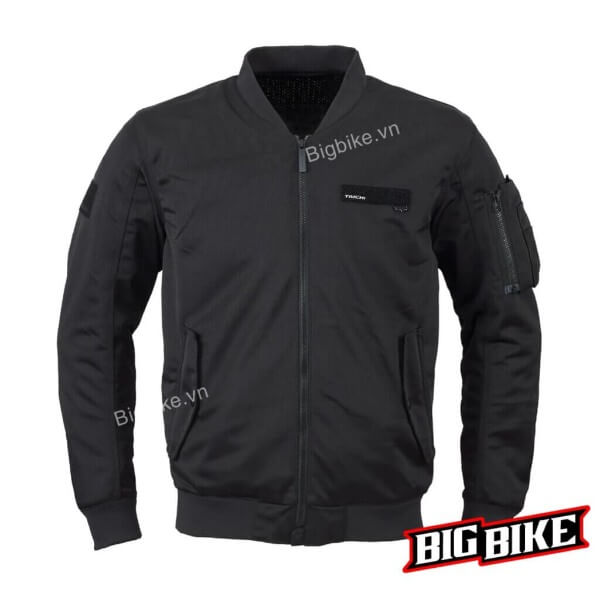
Summer mesh protective jacket
Waterproof touring jacket
Unlike the mesh jacket, the touring jacket is designed for long journeys and constantly changing weather conditions. Among the various motorcycle protective clothing lines, the touring jacket stands out for its multi-layer construction with a waterproof outer shell and a removable liner, letting the wearer flexibly adjust to each route.
The design often integrates many handy pockets, durable zippers and an openable vent system. This makes the jacket suitable for inter-provincial trips or multi-day touring, where weather plays an important role.
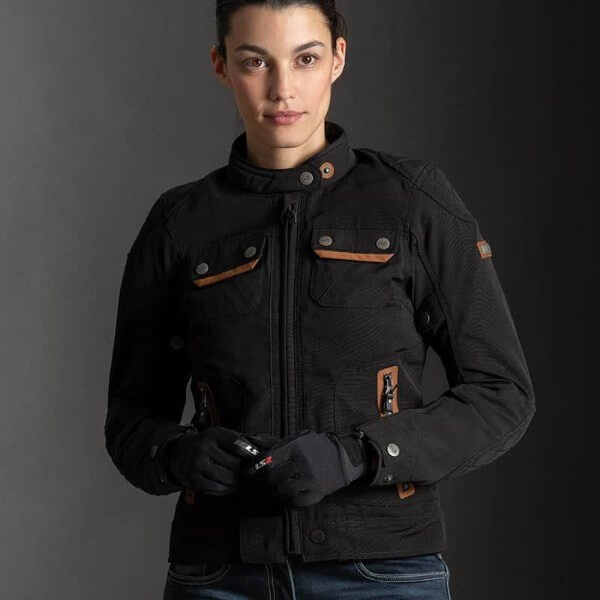
Lines such as the LS2 NORWAY PROTECTIVE JACKET clearly reflect a versatile touring spirit, balancing waterproofing, durability and flexibility in real-world use.
Technical fabric protective pants
Protective pants in technical fabric are usually made from polyester or Cordura with higher abrasion resistance than ordinary pants. The design focuses on durability and stable shape retention during long riding sessions.
Inside, the pants integrate knee and hip armor, helping protect key areas and stay in place when changing posture. This pants line is often paired with a touring jacket to form a matching outfit for long trips.
A worthwhile option in this segment is the LS2 NORWAY PROTECTIVE PANTS, a pants model aimed at bikers who frequently ride long distances and need lasting durability.
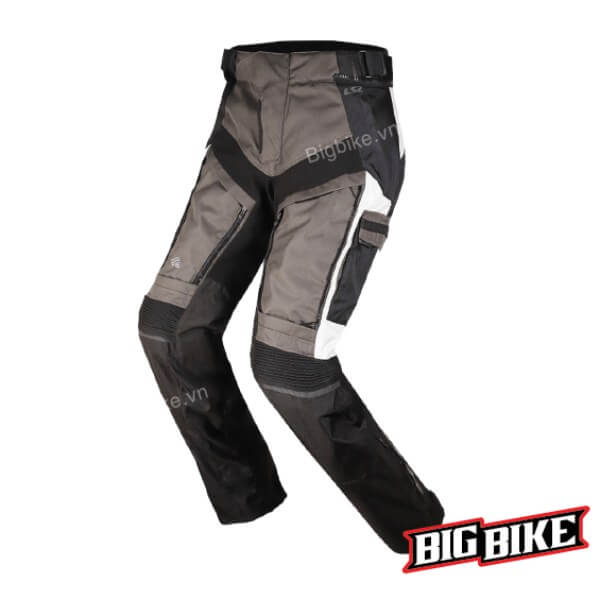
Technical fabric protective pants
Kevlar armored jeans
Kevlar armored jeans look almost like ordinary jeans but are reinforced inside with a tear- and abrasion-resistant fiber layer. As a result, the wearer keeps a simple style while still having the necessary protection at areas such as the knees and hips.
This pants line suits bikers who commute or ride daily but still want higher safety than ordinary pants. The not-too-rugged design makes them easy to match and use flexibly.
Models such as KOMINE PK-7443 are often chosen for their easy-to-wear fit, high practicality and sturdy internal reinforcement.
ADV / Touring jacket-and-pants set
An ADV or touring set is a matching outfit consisting of a jacket and pants from the same line, designed for long journeys or mixed routes. In the motorcycle protective clothing segment, these matching sets are highly rated for their multi-layer construction, helping the outfit adapt well to many different weather conditions and terrains.
The armor system is fully arranged at key areas, combined with durable materials and stable waterproofing. This makes the outfit suitable for bikers who ride big-displacement bikes or frequently travel long distances.
Sets such as the SPYKE SAHARA VENTED represent a modern ADV style, optimized for long multi-day trips and varied routes, from highways to mixed terrain.
How to choose protective gear that fits your needs
Choosing protective gear should not be based on feeling or outward appearance. To ensure safety and comfort while riding, you need to carefully consider your use case, materials, protection standards, weather adaptability and the fit of the outfit.
Identify your use case before buying
Before choosing motorcycle protective clothing, you need to clearly identify your purpose of use: daily city commuting or frequent long-day tours and trips. Each need requires a different structure and set of features.
If you mainly ride in the city, prioritize light, breathable lines such as mesh jackets or armored jeans to ensure flexibility. Conversely, for long journeys, multi-layer touring jackets and pants with waterproofing and high durability will be more suitable.
Choosing the right gear for your purpose not only optimizes costs but also ensures protective effectiveness throughout the ride.
Understand the materials and safety standards
One of the important factors when choosing motorcycle protective clothing is the protective armor system. Prioritize products with CE-certified armor (Level 1 or Level 2) to ensure impact absorption and dispersion in a collision.
As for materials, fabrics such as Cordura, Kevlar or high-density polyester (600D and above) offer better abrasion resistance than ordinary fabric. For leather gear, well-treated genuine cowhide provides high slide resistance, suitable for high speeds.
Beyond safety standards, breathability and the ability to adjust to the weather are also very important. In hot, humid climates, prioritize jackets with large mesh panels or a vent system; while for long rainy-season journeys, a waterproof layer and a thermal liner will keep the body stable and comfortable.
Understanding these factors will help you choose the right motorcycle protective clothing, instead of relying only on style or brand.
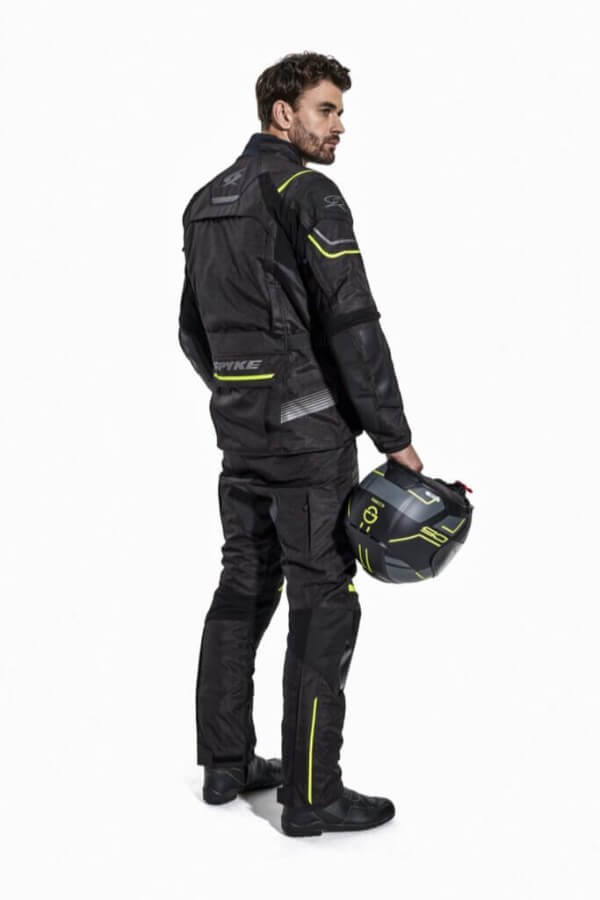
Understand the materials and safety standards
Ensure the size and fit hug the body correctly
Size directly affects protective effectiveness. An outfit that is too loose can cause the armor to shift away from the shoulders, elbows or knees in a collision, while gear that is too tight causes discomfort and restricts movement.
A suitable set of motorcycle protective clothing should hug the body, keep the armor in place yet still ensure flexibility when riding, leaning forward or putting a foot down. It is best to try it in a riding position to check real comfort.
Before buying, measure your chest, waist and arm length accurately and consult each brand's own size chart, avoiding choosing by ordinary clothing size because the structure of protective gear is completely different.
Common mistakes when buying motorcycle protective clothing
Besides choosing the right type of outfit, many people still make mistakes when buying motorcycle protective clothing, especially regarding sizing and how to try it on. These errors can cause the outfit to lose its inherent protective effectiveness.
- Choosing gear that is too loose: Armor at the shoulders, elbows, back or knees easily shifts away from the correct position in a collision, reducing impact absorption.
- Choosing gear that is too tight: Tight-fitting clothing causes discomfort, restricts movement and tires the body quickly on long rides.
- Not trying it in a riding position: Many people only try gear while standing upright without checking it in a riding position, leaning forward or putting a foot down – this can cause the armor to shift out of place during actual use.
- Choosing size by ordinary clothing: The structure of protective gear is completely different from everyday clothing. Therefore, measure your body accurately and compare against each brand's own size chart before buying.
A standard-quality protective outfit must fit snugly, keep the armor fixed in the correct position yet still ensure flexibility and comfort throughout the journey.
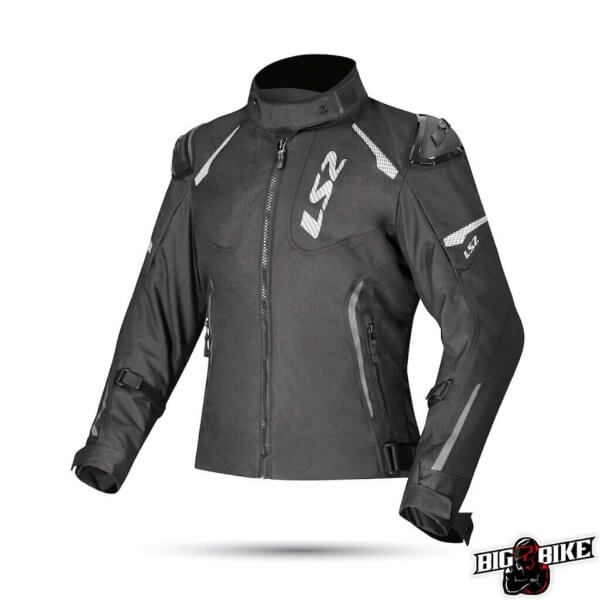
Common mistakes when buying protective gear
FAQs - Frequently asked questions
Is wearing protective gear when riding really necessary?
Yes. Motorcycle protective clothing helps reduce injuries when falling or sliding along the road surface thanks to abrasion-resistant materials and an armor system at the shoulders, elbows, back and knees. It is an important protective layer in unforeseen collision situations.
What is the CE standard on protective gear?
The CE standard is a certification that a product meets European safety standards for personal protective equipment (PPE). For motorcycle protective clothing, the common standard is CE EN 17092, which evaluates abrasion resistance, tear resistance, seam strength and the stability of the protective armor.
Do you need to wear protective gear in the city?
Yes. Even when riding within the city at low speed, the risk of collision always exists. Light armored jackets, jeans with a reinforced layer or thin armor are suitable choices for everyday city riding.
How long does motorcycle protective clothing last?
The average lifespan of a jacket and protective pants ranges around 5–7 years if used and maintained properly. However, this duration depends on frequency of use, weather conditions and the degree of material degradation.
How often should you replace motorcycle protective clothing?
You should replace it immediately after a strong impact because the armor inside may have lost its ability to absorb force. In addition, if signs such as frayed or torn fabric, cracked leather, deformed armor or unraveling seams appear, you should also replace it to ensure protective effectiveness.
Conclusion
Motorcycle protective clothing is not merely supporting apparel but also an important “shield” that helps you stay confident and proactive in every situation on the road. Choosing the right jacket and pants for your needs, prioritizing standard-compliant materials and a proper fit, will optimize both protection and comfort while riding.
Whether you commute daily in the city or frequently conquer long routes, investing in quality motorcycle touring protective clothing is a smart and sustainable way to protect yourself. Don't wait until a mishap to realize the importance of protective gear – equip yourself properly starting today so every journey is more complete and safer.
Related articles